
Here we’re going to show you how to install the Internet Information Services (IIS) web server version 10.0 in Microsoft’s Windows Server 2016 operating system.
This can be done both with PowerShell or through the GUI, we’ll cover both methods here.
Install IIS With PowerShell
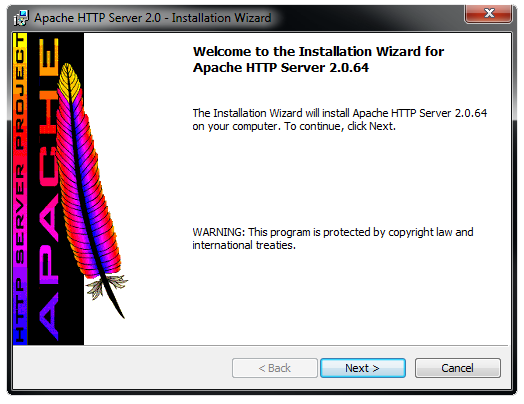
Now that your instance is current, you can install the Apache web server, MariaDB, and PHP software packages. Use the yum install command to install multiple software packages and all related dependencies at the same time. ec2-user $ sudo yum install -y httpd mariadb-server. How to install ArcGIS Web Adaptor. The ArcGIS Web Adaptor setup program should start automatically after the download is complete. If the setup does not start automatically, browse to the location of the downloaded setup files, and double-click Setup.exe. Review the terms and conditions of. Set up a Local web server on macOS The good thing about macOS is that Apache is installed on it by default. All you need to do is turn it on. In Finder, go to “Applications - Utilities,” then double-click on Terminal to open it. The Apache HTTP Server is one of the most widely used web server softwares available. A web server is the software that powers a website. It is an open-source software that can be run on a large number of different operating systems, including Windows. This article will teach you how to install the Apache web server on your Windows PC.
If you don’t have the GUI installed or just want to use the PowerShell command line interface (CLI) instead, follow these steps. This method is a lot faster than going through all of the GUI options.
- Open PowerShell with administrative privileges and run the Install-WindowsFeature cmdlet as shown below.
Here we include the management tools so that you can manage IIS on this server, as these are generally installed when using the GUI, making this PowerShell command equivalent with the GUI method below. If you do not plan on managing IIS through this server then you may prefer to not include this option.
- Once the installation has succeeded, you’ll be returned to the PowerShell prompt. At this point IIS should be running on port 80 by default with the firewall rule “World Wide Web Services (HTTP Traffic-In)” enabled in Windows firewall automatically.
- We can perform a simple test by opening up a web browser and browsing to the server that we have installed IIS on. You should see the default IIS page.
Install IIS Through GUI
If your server has the graphical user interface component installed you can also install IIS by following these steps.
- Open Server Manager, this can be found in the start menu. If it’s not there simply type “Server Manager” with the start menu open and it should be found in the search.
- Click the “Add roles and features” text.
- On the “Before you begin” window, simply click the Next button.
- On the “Select installation type” window, leave “Role-based or feature-based installation” selected and click Next.
- As we’re installing to our local machine, leave “Select a server from the server pool” with the current machine selected and click Next. Alternatively you can select another server that you are managing from here, or a VHD.
- From the “Select server roles” window, check the box next to “Web Server (IIS)”. Doing this may open up a new window advising that additional features are required, simply click the “Add Features” button to install these as well. Click Next back on the Select server roles menu once this is complete.
- We will not be installing any additional features at this stage, so simply click Next on the “Select features” window.
- Click Next on the “Web Server Role (IIS)” window after reading the information provided.
- At this point on the “Select role services” window you can install additional services for IIS if required. You don’t have to worry about this now as you can always come back and add more later, so just click Next for now to install the defaults.
- Finally on the “Confirm installation selections” window , review the items that are to be installed and click Install when you’re ready to proceed with installing the IIS web server.
No reboot should be required with a standard IIS installation, however if you remove the role a reboot will be needed.
- Once the installation has succeeded, click the close button. At this point IIS should be running on port 80 by default with the firewall rule “World Wide Web Services (HTTP Traffic-In)” enabled in Windows firewall automatically.
- We can perform a simple test by opening up a web browser and browsing to the server that we have installed IIS on. You should see the default IIS page.
As you can hopefully see, it’s quite a lot faster to use PowerShell to perform the same task.
Summary
As shown we can easily install the IIS web server in Windows Server 2016 with both the PowerShell command line or the graphical user interface.
This post provides a quick and easy way of Installing Complete Web Server Step by Step on Windows PC.Web Server is a program that uses set of rules to serve better response of requested files. Web Server resides between web client (browser) and the requested file.Web Server is a network application running on some machine and listing on some port using some predefined set of protocols (set of rules).
The above diagram shows the exact working of Web Server.To learn an Installing Complete Web Server Step by Step on Windows PC follow all the step properly.Client access web resources using Web Server.web client and web server both are communicating using some set of rules called protocols.Once web server gets any request from web client then it finds requested resources.Resources may be HTML, PHP or XML file etc and Web Server responds accordingly to the web client as a response.
In this detailed introduction, we will show you how you can Installing Complete Web Server Step by Step on Windows PC.Installing Complete Web Server Step by Step on Windows PC means installing Apache Server, PHP, MySql Server, PhpMyAdmin.
Contents
- 1 Installing Complete Web Server Step by Step on Windows PC
Installing Complete Web Server Step by Step on Windows PC
Apache Installation
Apache is the most popular web server in the world developed by the Apache Software Foundation.Apache is an open source software and can be installed on almost all operating systems. This option is certainly recommended for new users or who installing Apache for the first time.To install Apache Server you can proceed as follows:
Step 1– To download Apache Web Server go to https://www.apachelounge.com/download/ .you can download Apache binaries as per your system bit version you need to be very careful while selecting the version of Apache web server.

Step 2–Unzip the file into C:.The file name may be Apache24 or whatever the latest version is.
Step 3–You can run Apache Server in 2 different way.
Install Web Server On Centos 7
1.Command prompt
You can run the following command to start Apache Server.
2.Right click on httpd
Right click on httpd and run as administrator.

You may get a warning about the server name. Don’t worry about it. Don’t close this window such as below screen.
Step 4–If you get any MSVCR100.dll or VCRUNTIME140.dll is not found as an error such as below.
Then download the respective.dll file.To download MSVCR100.dll zip file click here .
Unzip the downloaded zip file and copy the .dll file, paste it into system folder of the computer as shown in below screen.
Step 5–To test the work which you have did type https://localhost into your browser you should get the screen as below means Apache server works fine.
PHP Installation
Step 1- Now install the PHP scripting language on your PC. Go to http://windows.php.net/download#php-7.1 .In the binaries and sources releases section click on the drop-down list as shown below and select appropriate PHP Version of newest ‘Zip’ for VC14 x64 or VC14 x86 Thread Safe as per your operating system bit version.
Step 2- Open the downloaded zip file create a new folder in C drive as php and extracted to C:php folder.
Step 3- Add php Path to System Environment Variable.To ensure Windows can find PHP, you need to change the path environment variable and set as below screen.
To change Path go to Control Panel, choose System, select the “Advanced System Settings” and click the “Environment Variables” button.
Step 4- Changes some line of code in httpd.conf file in Apache24.navigation path of httpd.conf file is shown below.
Now configure Apache to use that PHP, after all the LoadModule lines, add the following :
In the same file. Search for the line starting DirectoryIndex. Change it as follows.
Editing the ServerName variable, replace with either the system’s hostname or localhost
Step 5- In Configuring php.ini rename the php.ini-production present in php folder to php.ini and make changes to several lines as follows.

Step 6-Create a file named index.php in Apache’s root directory (htdocs)and add this code:
Step 7- To test the work which you have did type https://localhost into your browser you should get the screen as below means PHP install properly.
MYSQL Installation
Step 1- Install the MySQL database server on your window PC. This is done using the ‘MSI’ installer for Windows. Go to https://cdn.mysql.com//Downloads/MySQLInstaller/mysql-installer-web-community-5.7.19.0.msi and download the direct one click ‘MySQL Installer for Windows.
Step 2-Run the installation.
Install MySql Installer by double clicking on it.
This is the first page of installation that is license and agreement.You just agree on the term and condition and proceed.
Choose proper setup type as per your requirements and proceed.
Execute all the following product, if some product execution failed then not an issue you will proceed.
In product configuration section MySql product related configuration are done as shown below.
You can define the password for your root account of MySql.
In Plugins and Extensions you can enable x protocol or by default, it has shown port number 33060 for MySql.
Apply all configuration which is shown in below screen by pressing execute button at the bottom.
Green sign indicates that all configuration is applied properly and successfully and then press finish button to complete the successful installation
PHPMyAdmin Installation
phpMyAdmin is a client for MySQL .phpMyAdmin is a free software tool written in PHP, it allows to control MySQL server from a web browser. Once you installed it, you can create a database, user as well as set privileges to MySQL users or databases.
Step 1- To Download the latest version of phpMyAdmin goes to the https://www.phpmyadmin.net/downloads/.
phpMyAdmin downloads come in two different packs.

One language pack that is “English”, and “all-languages” packs mean supporting multiple languages user interfaces. downloaded files are in zip format.
Windows Web Server
Step 2-Extract and place phpMyAdmin into “C:Apache24htdocs” folder. Then rename the folder “phpMyAdmin-4.x.x-language” as “phpmyadmin”.
Step 3- Type http://localhost/phpmyadmin into your browser you should get the screen as below means phpMyAdmin install properly.
Installing Web Server On Centos 7
Now you have your web server installed completely.This is all about how to Installing Complete Web Server Step by Step on Windows PC.