
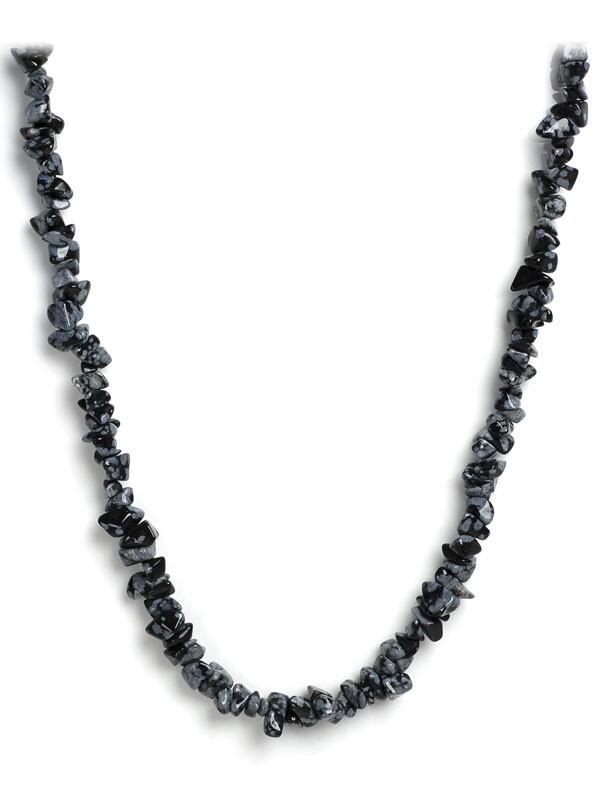
Snowflake obsidian chip stones are amazing because of their small, convenient size. You can carry them in your medicine pouch, purse, car, and just about anywhere else, to access their magic without having to worry about carting a big, heavy stone around! You can put them in your body products to infuse them with the properties of the stone, in. ZenQ 1 lb Black Obsidian Tumbled Stone Chips Crushed Natural Crystal Quartz Pieces. 4.7 out of 5 stars 680. Get it as soon as Wed, Apr 21.
These small Black Obsidian chips stones are good for home decoration, stone collection, wishing bottles, succulents, scene setting, fish tank, flowerpots, houseplants, garden, fountain and more. Perfect gift for beginners or collect crystals. Snowflake obsidian chip stones are amazing because of their small, convenient size. You can carry them in your medicine pouch, purse, car, and just about anywhere else, to access their magic without having to worry about carting a big, heavy stone around!
ONYX is envisioned for creative professionals and new beginners alike. It scales from the smallest shows to the largest touring productions with easy-to-use tools and optimized graphical work environments that can adapt to any task and complexity.
Console systems are available in various sizes to accommodate scale and budget. At any point the full system can be run on PC systems with USB connected control surfaces or simply by intuitive touch screen operation.ONYX is an easy-to-learn and fun-to-use powerful lighting control platform designed for industrial hardware consoles and PC systems.Internally, the consoles work in combination with a carefully customized Operating System. When installed on PC systems it offers the full power of the platform with no feature restrictions. ONYX calculates all processing internally and does not require the use of costly external processing nodes. All hardware is enabled to its full potential, while the various ONYX license levels provides access for up to 128 Universes.
Black, Lustrous, Beautiful
Obsidian and Apache Tears make awesome tumbled stones. When tumbled properly they are jet black, highly lustrous and beautiful. Many of them are also transparent. However, some people have a hard time tumbling these natural glasses because they often bruise or chip in the tumbler. However, you can easily get super results by tumbling them gently in a generous amount of reusable ceramic media. We describe the process and a few tips that will help ensure your success.
Tip #1: These materials are soft. They have a Mohs hardness of about 5. Because they are soft, they shape quickly in a tumbler barrel with silicon carbide grit. We skip the coarse grit step and use a three step tumbling process - 1) medium grit; 2) fine grit; and, 3) polish.
Tip #2: These materials are fragile. The particle-to-particle impacts within the tumbler are what cause bruising and chipping. When we tumble them we always surround them with small cylinder-shaped ceramic media. We fill the tumbler barrel with about 50% ceramic media and about 50% obsidian/Apache tears. The ceramic cylinders act like roller bearings and promote a smooth tumbling action. They prevent the pieces of natural glass from hammering against one another in both rotary and vibratory tumblers. Without the cylinders, the pieces of glass will likely be cracked, broken or chipped around the edges.
Tip #3:
Black Grounding Stone
These materials can produce gas in the tumbler barrel. You read that right. Small amounts of gas are produced as these materials are worn away in the tumbler. This only causes a problem when your tumbler barrel has a lid that can be pushed off by a small amount of gas pressure in the barrel. If you have a vibratory tumbler this is not a problem. Take care of the gas by 'burping your barrel' if it starts to bloat. Or, you can follow the advice given by Steve Hart, author of the book 'Modern Rock Tumbling' - he adds 1/2 teaspoon of baking soda to the tumbler barrel to prevent gas production. If you want more information on this read our article: Gas in the Rock Tumbler Barrel?Tumbling Recipe: Apache Tears or Obsidian in a ROTARY Tumbler
Barrel Loading: Fill the barrel 2/3 full with 50% Apache Tears and 50% small ceramics.
Step 1: Two tablespoons medium grit (150/220) per pound of rock and ceramics, enough water to cover the rocks. For tumbling whole Apache tears, run four or five days. For broken pieces of obsidian tumble for seven days and inspect. Tumble longer if needed.
Step 2: Two Tablespoons of fine grit (500 or 600) per pound of rock and ceramics, enough water to cover the rocks, tumble for four or five days.
Step 3: Two tablespoons of TXP or #61 Rapid Polish per pound of rock and ceramic, enough water to cover the rocks, tumble for seven days.
Burnish in soapy water for 30 minutes - only if needed. Learn more about burnishing here.
Tumbling Recipe: Apache Tears or Obsidian - VIBRATORY Tumbler
Barrel Loading: Fill the barrel to manufacturers suggested level with 50% Apache Tears and 50% small ceramics.
Obsidian Stone Raw
Step 1: One-half tablespoon of medium grit (150/220) per pound of rock and ceramics, add just enough water to make the grit stick to the rock and media. Run for two days, inspecting frequently to maintain a thin mud slurry. Rinse and inspect your rough after two days. If more time is needed, run for two additional days. Continue until you are satisfied with the shape.Step 2: One-half tablespoon of fine grit (500 or 600) per pound of rock, add just enough water to make the grit stick to the rock and media, tumble for two days.
 Step 3: One-half tablespoon of TXP or #61 Rapid Polish per pound of rocks, add just enough water to make a thin polish slurry, tumble for two days. Tumble longer if needed. Don't over tumble.
 Burnish in soapy water for 30 minutes - only if needed. Learn more about burnishing here.
Happy Tumbling!
RockTumbler.com Authors
| Hobart M. King has decades of rock tumbling experience and writes most of the articles on RockTumbler.com. He has a PhD in geology and is a GIA graduate gemologist. He also writes the articles about rocks, minerals and gems on Geology.com. |