
- Step 3: A.vcf file will be downloaded. Transfer this file to your Moto G by copying it to the local storage. Step 4: Now, open the People app on your Moto G and from the Menu button on the bottom.
- Step to transfer gmail contacts to iCloud; Step 1. Export Contacts from gmail. Visit www.gmail.com and log in with your Google ID.
Moto G is one of the fasted selling phones in developing markets. I’ve been using it for the past couple of days and it is nothing less than impressive. Especially when you consider it costs only $179. It is fast, a pleasure to hold in hand and comes with the latest version of Android – 4.4 Kitkat.
This How-to article is going to demonstrate how to transfer your Google contacts over to iCloud. Step 1: Sign in to your Gmail account, and select “contacts”. Step 2: Go to the old version of Google Contacts by selecting “Go to the old version” on the left hand side of the bar.
I hope you are just as happy with your purchase as I am. I’ll be sharing more tips and tricks about the phone in upcoming articles but to start with, here are four different ways to get contacts from your old phone, iCloud, Gmail and a Vcard/CSV file to your Moto G.
1. Contacts Stored With Google Account
This is the simplest option. If you used your Google account to sync contacts on your old phone, you don’t really need to do anything.
Access Google and iCloud Contacts on the phone. SyncGene helps you to stay in sync and up to date all the time, and it gives you the opportunity to access and edit your online Calendars, Contacts and Tasks anywhere and from any internet connected device either from your Google Contacts or iCloud Contacts.The only thing you need to do is to merge your Gmail Contacts and Calendar with your. Handle all your iPhone contacts on your Mac or PC. IMazing supports extracting contacts from your iPhone accounts, like iCloud, Gmail, or Yahoo. Great if you need to consolidate your contacts from multiple sources.
During the set up process, if you entered the Google account where all your contacts are saved, they will be automatically downloaded to your phone.
In case there is a problem, Go to Settings -> Account -> Google, tap on your account and make sure Contacts option is checked.
2. Sync With iCloud (Manual)
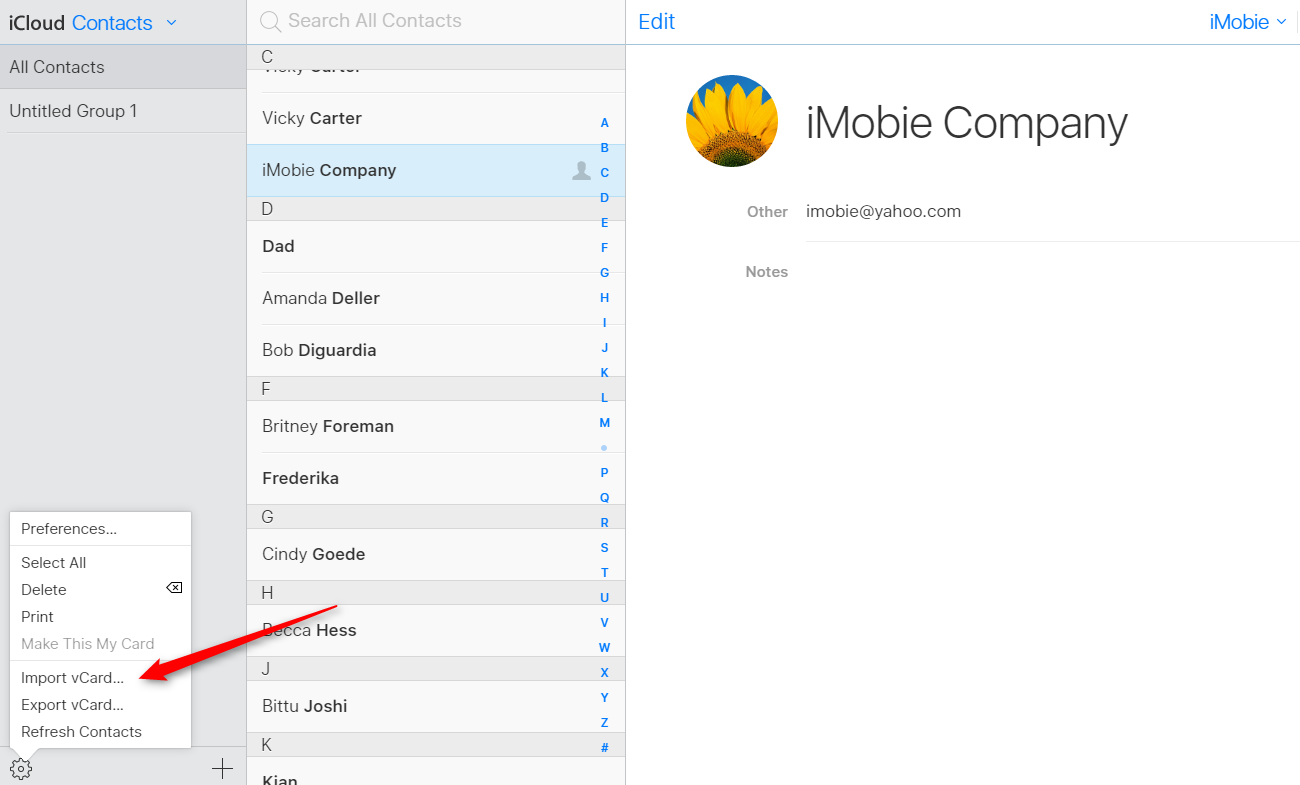
Note: This is a manual method where you need to download a Vcard file and transfer it to the phone manually. If you a looking for an automated approach, skip to the fourth option in the article.Step 1: Go to iCloud.com and log in. Then click Contacts. You should now see your contacts listed here. Select all the contacts by pressing Ctrl+A.
Step 2: From the gear icon on the bottom left corner, select Export Vcard.
Step 3: A .vcf file will be downloaded. Transfer this file to your Moto G by copying it to the local storage.
Step 4: Now, open the People app on your Moto G and from the Menu button on the bottom right corner, select Import/Export.
Then select Import from Storage. Your phone will now be scanned for a new .vcf file and your contacts will be imported.
3. Android To Android – Motorola Migrate
Coming from an Android phone? Motorola has made it really easy to transfer all kinds of content from your old phone to the new. First, you’ll need to download the app on your old phone (it comes pre-installed on your Moto G).
Step 1: Launch the app on your Moto G. From the first page, select Android as we are importing data from an Android phone.
Step 2: Next, select the kind of content you want to import. Contacts, messages, photos, videos and even call logs can be imported. For this example, I’m sticking with contacts.
Step 3: Moto G will ask for permission to take over your Wi-Fi and after you allow it, it will ask you to download the Migrate app on your old phone. Hit Next and a QR code will show up on the screen.
Step 4: Now, on your old phone, launch the app and just hit the Start button. You will now see a QR code scanner show up. With your old phone’s camera, scan the QR code displayed on Moto G’s screen.
That’s it. The phones will now connect and contacts will be transferred in mere seconds.
4. iCloud Sync With Motorola Migrate (Automated)
The recently updated Motorola Migrate app allows you to import contacts from iCloud to your Google account just by logging in to the services. If you don’t want to do it manually as described above, this is another alternative.
Step 1: From the first screen, select iPhone.
Step 2: Log in with your iCloud account and on the next step log in to your Google account and grant the app permission to access your contacts.
In the next couple of seconds, your iCloud contacts will be transferred to your Google account and will show up in the People app.
Your Way
How do you usually transfer contacts from your old devices to a new one? Did we miss something? Let us know in the comments below.
The above article may contain affiliate links which help support Guiding Tech. However, it does not affect our editorial integrity. The content remains unbiased and authentic.
Read Next
How to Increase Internal Memory on Any Xiaomi Phone
Here's a quick trick to increase the internal storage in Xiaomi Redmi phones. Check it out!
Keep Apple devices in sync
Many people have several email addresses across disparate email providers, all of which keep track of their contacts. Google Contacts, for example, is a standalone service which only tracks people you’ve contacted via Gmail, when using an Android phone, or if you’ve synced it to your iOS device.
Apple keeps your contacts within its standalone “Contacts” app. Both entities are siloed vaults for contacts, and it can be confusing when your contacts aren’t synced to the devices you use most often. If you deleted a contact in Google Contacts, it’s also smart to have all your contacts synced to another service and to backup your device often so you never lose any data.
Here, we’ll tell you how to sync Google Contacts to iPhone, if there’s a Google Contacts for iPhone app, how to import contacts from Google to iPhone manually, and why it’s important to have your Google contacts on iPhone.
Reasons to transfer your Google contacts to iPhone
Many people use Gmail as their default email provider and can’t see a reason to export Google contacts to iPhone. It’s a fair position, but these are a few reasons importing Google contacts to iPhone is a great idea:
- You have one place for all contacts. Gmail for personal use, iCloud for your Apple devices, Outlook for work – all the unique email providers log your contacts in distinct vaults. Having one place all your contacts live is smart.
- Services often don’t sync. You may be emailing someone new fairly often, then go to text them and find they’re not in your contacts list. That’s because services often don’t sync contacts automatically. Routine backups and syncing are the right moves to make.
- You can merge contact info. When you sync your Google contacts to iPhone, there’s an option to merge contacts. Someone may have emailed from a Gmail address, but you’ve got their Outlook and phone number in another contact. After you import, you can simply merge the two profiles.
- Google makes changes (often). Google once kept your contacts in Gmail, then moved them to the standalone Google Contacts service. There were no widespread reports of contacts being deleted with this transfer, but Google likes to shift ground beneath you. It’s better to sync your Google information to iCloud and back it all up.
- You don’t want to use Gmail anymore. People often switch email providers. Many also want to break free of Google due to privacy concerns. After syncing your contacts, you’re free to email people from an iCloud or other email address with the same ease of using Gmail.
- iCloud supports ‘Push’ syncing on iPhone. For syncing contacts and data, Apple forces Gmail and other services to use a ‘Fetch’ protocol to get new data. This means your data is synced less frequently, which can cause contacts to not sync properly, or when you need them.
How to sync Google contacts to an iPhone
You can sync Google contacts to iOS without ever touching your iPhone! Syncing iCloud to all of your Apple devices will keep your iCloud contact data on each of your devices. This means you can grab Google contacts from the web and download them to your Mac. Here’s how:
- Go to google.com
- Sign into Google if necessary
- Open the Google Contacts app from the nine-dot menu on the top right of the page
- From the Google Contacts website, select “Export”
- Choose “vCard (for iOS Contacts)” from the popup window
- Select “Export”
This downloads all of your Google contacts in vCard format to your Mac. To read and download Google contacts iPhone will need them to be in vCard format, so don’t overlook that step.
With your Google contacts downloaded in vCard format, follow these steps on your Mac to download and sync the contacts to your iCloud account:
- Open the Contacts app on your Mac
- From the menu bar, select “File”
- Choose “Import”
- Select the vCard file downloaded from the Google Contacts website
- Choose “Open”
Your Google contacts will download to your Mac’s Contacts app, which syncs with iCloud.
Sync Google contacts to iPhone via settings
If you want to skip the Mac altogether, you can! In the iPhone’s settings, you can sync your Google contacts data directly. Just remember it only ‘fetches’ data and won’t push new or changed contact data to your device automatically. If you’re syncing data and don’t see a contact, this may be why.
First, you need to add your Google account to your iPhone. If your Google account is already synced to your iPhone, feel free to skip these steps. Otherwise, this is how to add your Google account to the iPhone:

- Open the Settings app on your iPhone
- Select “Mail”
- Choose “Accounts”
- Select “Add Account”
- Choose “Google” from the list
- Follow the on-screen prompts and enter your Google account login credentials
Here’s how to sync Google contacts to iPhone via the Settings app:
- Open the Settings app on your iPhone
- Select “Mail”
- Choose “Accounts”
- Select your Gmail account
- Make sure “Contacts” is toggled on
Whichever method for syncing contacts you use, one thing you should definitely do is create backups of your iPhone. For that, AnyTrans is exactly what you need.
With AnyTrans for Mac, you have complete control over your iPhone. Simply open the AnyTrans app, plug your iPhone into the Mac, and you will be able to create backups of your entire device, or particular items like messages, photos, and even contacts!
AnyTrans has a ton of other features, too, including the option to quickly transfer your iPhone’s data to a new device. You can also manage your home screen, delete apps from your iPhone, restore your phone from previous backups, and curate your media library!
Import Google contacts to iPhone with iCloud
After importing your Google contacts to your Mac, iCloud should sync your contacts across your iPhone, iPad, and Mac.
To verify your iCloud contacts are synced with your Mac, follow these steps:
- From the Mac menu bar, select the Apple logo on the top left corner
- Select “System Preferences”
- Choose “Apple ID” at the top right corner of the new window
- Select “iCloud” from the left side of the window
- Make sure “Contacts” is toggled on
On your iPhone, ensure your iCloud contacts are syncing by following these steps:
- Open the Settings app on your iPhone
- Select your Apple ID name banner at the top of the screen
- Choose “iCloud”
- Ensure “Contacts” is toggled on
If you like, feel free to toggle contacts off and back on to trigger syncing. This shouldn’t be necessary, but doing so will ping the iCloud servers to initiate syncing of contacts or any other cloud service to your iPhone.
Contacts is one of the services iCloud syncs across your devices. There’s also Mail, which keeps your inbox and folders current on all devices; Reminders, to help you manage to-do lists and trigger reminders when you’re at a location; Notes, which syncs and shares all of the data in your Notes app on your iPhone, iPad, and Mac; Messages, to ensure all chats are up to date; and Safari, which keeps open tabs, the reading list, and bookmarks synced on all of your Apple devices.
Those services all stake their claim to your iCloud storage, but none as much as Photos. Most users will notice their iCloud data allotment is dominated by the pics and video in the Photos app, which is synced across all Apple devices. Much of what’s found in Photos may be unnecessary, too; old photos, screenshots, and blurred images occupy precious space.
To help manage your iCloud media storage, get Gemini.
How To Get My Contacts From Icloud
The Gemini app for Mac helps you manage similar and duplicate images in your Photos folder, which you are then able to delete quickly. The Gemini iOS app continually watches your Photos app for video, screenshots, and other categories. It then creates unique folders for those media types in the Gemini app, and provides a quick and easy way to bulk-delete your images. The gigabytes of iCloud storage you will reclaim with Gemini make it well worth a download.
Conclusion
Managing contacts on your Apple devices is simple. You may prefer to sync your Google contacts and continue using Gmail and other Google services, or download and add all of your Google contacts to iCloud. Either way, you’re in full control.
AnyTrans is a great app for managing backups, a practice we should all be in as we move and sync data across services. If anything goes awry, a backup helps you recover data with ease.
Gemini helps manage files, folders, and photos to keep your iCloud free of unneeded files. If you’re going to sync data, you should keep as much room available in your cloud storage account as possible.
AnyTrans and Gemini are free to use for seven days with your trial of Setapp, a robust suite of productivity apps for the Mac. Along with these two incredible apps, you’ll have unlimited access to over 200 other native Mac apps during your week of free use!
When the trial period ends, continued access to the entire Setapp catalog is only $9.99 per month. It’s a sensational offer for so many amazing apps, so why wait? Give Setapp a try today!
Meantime, prepare for all the awesome things you can do with Setapp.
Read onSign Up
Export Gmail Contacts To Icloud