
- GitHub - techwizrd/GitKraken: A Git client for the GNOME Desktop.
- Please like the video if you enjoyed & subscribe for more.Check out my other videos: social media.
UPDATE January 2017: Gitkraken V2.0 released. Add a new video to demonstrate the new features and performance improvement.-. 'Learn to do the proper version control using Gitkraken, and start making a difference in managing your project source code. 'In this course, you will learn how to start using Git Version Control.
Syncing your GitHub Issues in GitKraken Boards lets you break issues out into columns and visualize them.
What gets synced from GitHub?
- GitHub Issues
- Assignees
- Description
- Comments
- Labels
Connect to GitHub
The button is available from the bottom of the left Boards panel in GitKraken Boards.
You can also connect to GitHub from the Integrations section of the User Options menu.
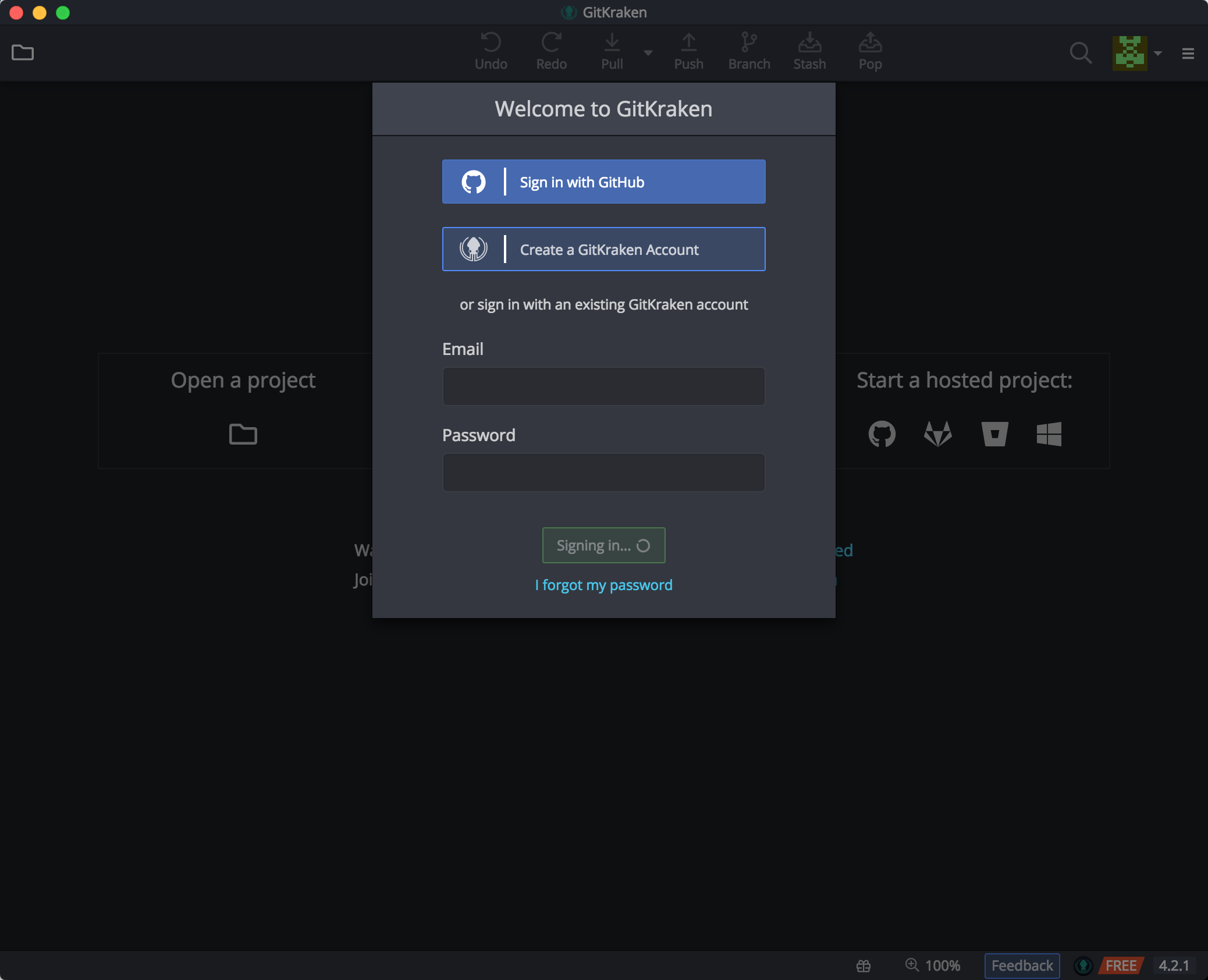
Click the button, login to GitHub, and authorize GitKraken Boards.
Your GitHub account should now be connected to GitKraken Boards!
Create a Synced Board
Open the Boards panel and click on the button.
Search for the GitHub repo issue board you wish to sync.
GitKraken Boards has a max syncing limit of 1,000 issues. If you have repos with 1,000+ issues you wish to sync, consider first archiving older issues in GitHub.
Note: You must be an administrator for the GitHub repo to create the initial synced board. The repo name will be grayed out with a lock icon if you don't have administrator permissions on that repo.
IMPORTANT: If you don't see your repo in the list search, your organization needs to grant permissions for GitKraken and GitKraken Boards in GitHub.
Click the button to confirm that you wish to sync this board with GitKraken Boards.
GitHub synced boards will be indicated by the GitHub logo to the left of the board name.
Important: GitKraken Boards's GitHub Sync relies on a repo webhook created during the sync set up. Please do not modify or remove this webhook as this will cause the GitHub sync to fail.
Managing Synced Boards
Git Vs Github
When you first sync a board, you will start out with just one column in GitKraken Boards. However from here you can create more columns and build out the workflow for your issues.
From here, new issues added to GitHub will now sync to GitKraken Boards.
Conversely, new cards added to GitKraken Boards will also be synced to GitHub. You may need to refresh GitHub to see the new issue.
Type the GitHub issue number in the search field to quickly find corresponding card.
Also, if you ever want to jump to the GitHub issue from GitKraken Boards, click on this icon to access the link:
Milestones
Any milestones that you create in Github Issues will be added to GitKraken Boards, and any milestones you create in GitKraken Boards will be respected in Github (you will need to refresh GitHub to view any changes).
Why do teams use GitHub and the GitKraken Git GUI?

Migrating to Git as your distributed version control system will improve the overall efficiency of your development teams, but initially, developers will face a steep learning curve. Failure to address this challenge often results in increased time to ship your code and decreased code stability. In this white paper, you’ll learn how to tackle this challenge head-on! We’ll share best practices for how tens-of-thousands of teams have successfully deployed Git, GitHub and the GitKraken Git GUI across their organizations.
This white paper covers the following topics:
- Benefits of Git
- Migrating to Git from other source control methods
- Challenges developers face adopting Git
- Training and educational resources for learning Git
- Best practices for large scale deployments of Git, GitHub and the GitKraken Git GUI
- How to deploy the GitKraken Git GUI with GitHub to enhance your workflow
- Maintaining security standards with Stand-Alone & Self-Hosted
- Best practices for deploying GitKraken Stand-Alone & Self-Hosted
How to use GitHub with the GitKraken Git GUI
If your team is using GitHub.com or GitHub Enterprise to host your repositories, the GitKraken Git GUI can help streamline your workflow and make working with Git much more intuitive! Distribute this tutorial video to your team, and you’ll have everyone up and running with Git, GitHub and the GitKraken Git GUI in less than 1 hour.
This video covers the following topics; use the links to quickly jump ahead:
- What is a Git repository? (1:33)
- Working with remote repositories and GitHub (2:29)
- Authenticating GitKraken with GitHub (3:48)
- Generating an SSH key with GitKraken (7:59)
- Cloning a repo from GitHub (10:45)
- Opening an existing repo (12:35)
- Making a change, staging and committing (14:29)
Gitkraken Github Private Repo
- Pushing a change to a GitHub remote (22:42)
- Undoing (26:15)
- Pulling a change from a GitHub remote (30:20)
- Creating a feature branch and pull request (32:24)
- Adding a remote manually (45:17)
- Using GitKraken Boards with GitHub Issue Sync (47:23)
How to use GitHub with GitKraken Boards
GitKraken Boards syncs in real-time with GitHub Issues and GitHub Milestones so changes made in either system are immediately reflected in the other. Link cards to GitHub pull requests, check PR statuses, auto-update cards based on PR statuses and view build statuses without leaving GitKraken Boards.
Plus, use GitHub Actions to automate your workflow; trigger automated actions in GitKraken Boards by linking cards to pull request descriptions or commit messages in GitHub. See how to quickly set up GitHub Issue syncing with GitKraken Boards.